Dramatherapy in Practice: What Really Happens in the Therapeutic Process
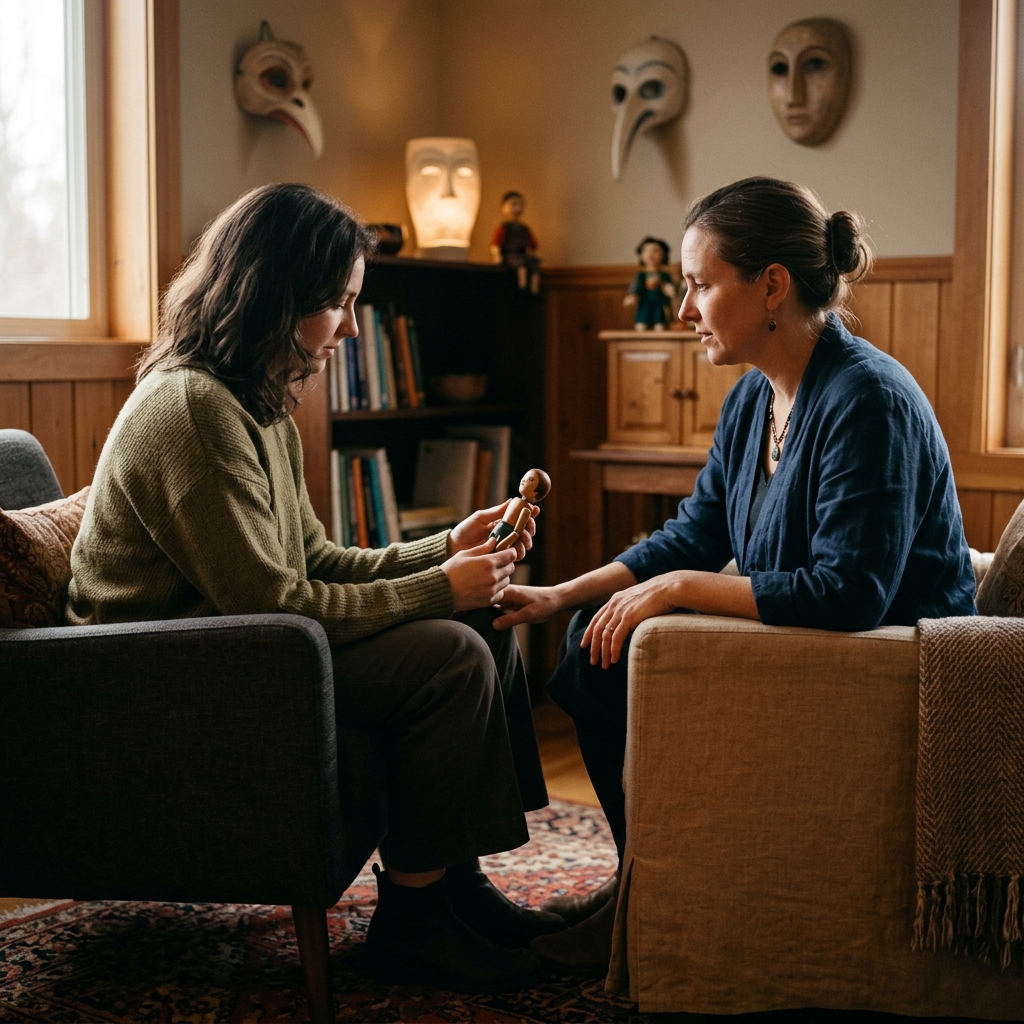
Drama therapy is a therapeutic craft – and like any craft, it stands on three inseparable pillars: process, relationship, and the expertise of the therapist.
If you are wondering what actually happens behind the doors of a drama therapy room, you are in the right place. Drama therapy is not just a theater club or a series of games – it is therapy where dramatic and playful means serve as a language of communication between therapist and client.
What we mean by "process" in drama therapy
In drama therapy, we do not work with chance. Every meeting is part of an intentionally guided process that has its beginning, middle, and end. It is a journey where the therapist helps the client explore their own themes through roles, stories, or movement (Vávra in Kosek et al., 2025).
The process is always tailored to the client's needs. We do not push for performance; we focus on the experience and insight that the play brings.
The Therapeutic Relationship: The Foundation of Change
Even the most sophisticated technique will not work without a solid foundation – and that is the therapeutic relationship. In drama therapy, this relationship is specific: it is a partnership where we explore the fictional world together, but remain anchored in the safe reality of the therapeutic contract.
A therapist is not a director who tells you what to play. They are a witness, a partner in play, and a guide who ensures that everything happening in the room remains safe and therapeutic.
The Role of the Therapist's Expertise
A drama therapist is a professional who connects the worlds of art and psychotherapy. This requires not only a deep understanding of dramatic structures but also psychological knowledge, empathy, and constant supervision.
Want to find out if drama therapy is suitable for you? I offer a free initial call to discuss how drama therapy can help you.
call BOOK AN INITIAL CONSULTATION